The 10 Best Laptops to Buy Right Now (2026 Rankings)
The computing landscape in 2026 has undergone a radical transformation, moving away from simple year-over-year specification bumps toward a more specialized, purpose-driven market. As we navigate the mid-point of the decade, the distinction between a "mobile" device and a "desktop" hub has blurred, with power efficiency and connectivity standards like Wi-Fi 7 and Thunderbolt 6 becoming the benchmarks for quality. For the modern consumer, choosing a computer is no longer just about the processor speed; it is about how the device integrates into a larger ecosystem of peripherals, security software, and specialized input methods.
This year’s rankings reflect a unique shift in the industry. While traditional laptops remain the cornerstone of productivity, we are seeing the rise of ultra-compact "mini-nodes" and highly specialized gaming handhelds that challenge the traditional clamshell design. Buyers are increasingly prioritizing ergonomic customization, robust network throughput, and comprehensive security suites. Whether you are a student looking for durability, a professional needing massive multi-core performance, or a gamer seeking the cutting edge of low-latency input, the current market offers tailored solutions that were unimaginable just a few years ago.
The Top 10 Computing Solutions for 2026
1. Dell Tower Plus 2025 (Enterprise Edition)
Standing as the titan of productivity, the Dell Tower Plus 2025 remains the gold standard for dedicated office environments and home laboratories. While not a laptop in the portable sense, its inclusion in a 2026 ranking is essential because it serves as the "anchor" for modern remote-work setups. It features a modular internal architecture that allows for tool-less upgrades, ensuring that the machine remains relevant through 2030. In real-world use cases, this system is favored by data scientists and video editors who require sustained thermal performance that a thin-and-light chassis simply cannot provide.
- Pros: Exceptional thermal management, massive expandability with multiple PCIe Gen 6 slots, and whisper-quiet operation even under full rendering loads.
- Cons: High power consumption and zero portability, requiring a dedicated workspace and stable power supply.
2. Asus Rog Xbox Ally X
The Asus Rog Xbox Ally X represents the pinnacle of the "handheld laptop" revolution. By 2026, the software layer between Windows and Xbox has become seamless, allowing this device to function as a full-fledged PC when docked and a premier gaming console when handheld. It utilizes the latest ultra-low-voltage APUs that deliver performance-per-watt figures previously reserved for high-end gaming laptops. For the frequent traveler or the "couch-gamer" who also needs to reply to emails and run light productivity software, the Ally X is the most versatile device on this list.
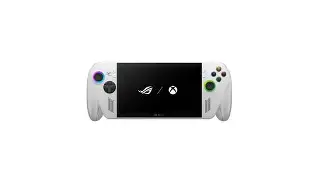
- Pros: High-refresh-rate OLED display, integrated Xbox ecosystem support, and impressive ergonomics for long sessions.
- Cons: Battery life remains a challenge during intensive AAA gaming, and the small screen is not ideal for complex spreadsheet work.
3. Gmktec Nucbox G10 Mini Pc
Compact computing has reached a milestone with the Gmktec Nucbox G10. This device is roughly the size of a stack of coasters but packs a multi-core punch that rivals mid-range laptops from last year. It is the ideal solution for "hot-desking" environments where a user carries their entire workstation in a jacket pocket and plugs into standardized docks at different locations. In educational settings, the G10 has become a favorite for labs where space is at a premium but high-speed processing is required for coding and simulation.
- Pros: Extremely small footprint, surprisingly robust port selection (including dual USB4), and high value-to-performance ratio.
- Cons: Requires external peripherals (monitor, keyboard, mouse) and has limited internal storage expansion compared to larger towers.
4. Dell Chromebook 3120
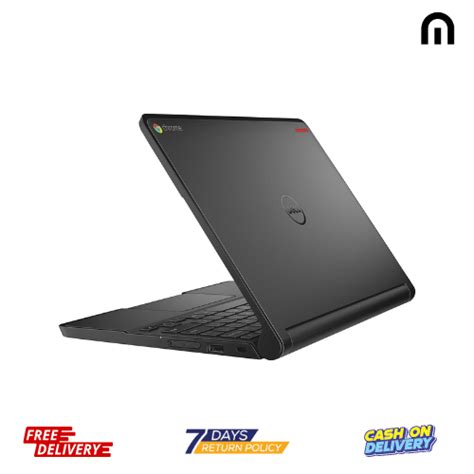
Reliability and durability are the hallmarks of the Dell Chromebook 3120. Designed primarily for the K-12 education market and frontline industrial workers, this device is built to survive drops, spills, and the rigors of daily travel. In 2026, ChromeOS has matured into a platform capable of handling most web-based enterprise applications with ease. For buyers who care about "up-time" and ease of management, the 3120 offers a zero-fuss experience that is particularly attractive for large-scale deployments where IT support must be kept to a minimum.
- Pros: Ruggedized chassis with reinforced hinges, exceptional battery life lasting up to 14 hours, and a spill-resistant keyboard.
- Cons: Limited offline capabilities and the screen brightness is insufficient for direct sunlight usage.
5. Acemagic F3A Mini Pc
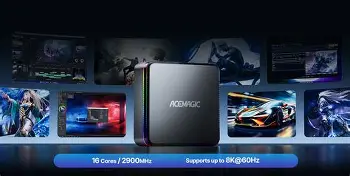
The Acemagic F3A occupies a unique niche as an aesthetically pleasing, high-performance mini-desktop that doubles as a media server. With the rise of 8K streaming and local AI processing, the F3A provides the necessary hardware acceleration to handle heavy media tasks without the bulk of a traditional PC. Its futuristic design, featuring integrated status displays, makes it one of the few computers users actually want to show off on their desks. It is particularly well-suited for creative professionals who need a secondary machine for rendering or hosting local databases.
- Pros: Striking visual design with real-time hardware monitoring, dual-channel memory support, and excellent connectivity options.
- Cons: The aggressive styling may not fit all office decors, and the fan can become audible during heavy AI workloads.
6. Keychron Q3 Ultra 8K (Input Centric System)
While often categorized as an accessory, the Keychron Q3 Ultra 8K is included here because, by 2026, professional "input systems" are viewed as equal in importance to the CPU itself. This keyboard is built for those whose primary "compute" involves massive amounts of data entry, coding, or high-stakes competitive gaming. With an 8,000Hz polling rate, it eliminates the input latency that can plague standard laptop keyboards. For the buyer who values the tactile experience and "acoustic profile" of their workstation, pairing a high-end mini-PC with the Q3 Ultra 8K is the premium alternative to a traditional laptop.
Find top-rated Laptops & Computers products at great prices.
Shop Amazon →- Pros: Full metal CNC construction, superior typing feel, and extreme low-latency performance for professionals.
- Cons: Very heavy and lacks wireless connectivity, emphasizing its role as a stationary "command center" component.
7. Epomaker He65 Mag
The Epomaker He65 Mag introduces magnetic (Hall Effect) switches to the mainstream portable market. This technology allows users to customize the actuation point of every key, making it a "transformer" for different use cases—deep actuation for typing long articles and hair-trigger actuation for gaming. As 2026 buyers move toward more personalized hardware, the He65 Mag represents the trend of "functional ergonomics." It is the perfect companion for a high-end tablet or a docked handheld, providing a mechanical experience in a layout that fits in a standard laptop sleeve.
- Pros: Highly customizable magnetic switches, compact 65% layout perfect for travel, and durable PBT keycaps.
- Cons: Magnetic switch technology has a slight learning curve for software configuration and is more expensive than standard mechanical options.
8. Redragon Eclipse K720 Pro
For the budget-conscious professional who refuses to sacrifice features, the Redragon Eclipse K720 Pro stands as the value leader of 2026. This full-sized mechanical keyboard offers tri-mode connectivity (Bluetooth, 2.4GHz, and Wired), allowing a user to switch between their laptop, tablet, and smartphone with a single button press. It addresses the common buyer concern of "cable clutter" while providing the numeric keypad necessary for financial analysts and engineers. Its inclusion in this list highlights the importance of versatile peripherals in the modern, multi-device ecosystem.
- Pros: Incredible value for money, versatile tri-mode wireless connectivity, and a full-size layout with high-quality switches.
- Cons: Plastic construction feels less premium than the Keychron, and the software suite is less polished.
9. Tp Link Archer Be3600 (Connectivity Hub)
No computer in 2026 is an island, and the Tp Link Archer Be3600 is the essential component that makes high-performance computing possible. As a Wi-Fi 7 router, it provides the multi-gigabit wireless backplane required for cloud gaming, 4K VR conferencing, and rapid large-file transfers. Buyers often overlook the router, but in 2026, a laptop is only as good as its connection. The Be3600 ensures that the "connected" part of your compute experience—whether it’s on a Chromebook or a high-end Asus ROG—is never the bottleneck.
- Pros: Future-proof Wi-Fi 7 speeds, low latency for gaming and VR, and excellent range for larger homes/offices.
- Cons: Requires a multi-gigabit internet plan to fully utilize its potential and has a relatively large physical footprint.
10. Mcafee Plus (Security Layer)
Rounding out our list is the Mcafee Plus security suite, representing the "invisible" side of 2026 computing. With the proliferation of AI-driven phishing and decentralized threats, a computer is no longer a tool; it is a vault. Mcafee Plus has evolved into a comprehensive identity protection and system optimization engine that runs silently in the background of all the hardware mentioned above. For buyers concerned with privacy and the longevity of their hardware, this proactive security layer is as critical as the choice of a processor.
- Pros: Advanced identity theft protection, minimal system impact on modern multi-core CPUs, and comprehensive multi-device coverage.
- Cons: Subscription-based model requires recurring costs, and some power users may find the notification system intrusive.
Comparative Analysis of Computing Categories
To help guide your purchase, the following table compares the primary hardware categories available this year based on the key metrics buyers prioritize: Portability, Performance, and Expandability.
| Category | Representative Model | Primary Use Case | Portability Rating | Performance Rating |
|---|---|---|---|---|
| Enterprise Tower | Dell Tower Plus 2025 | Heavy Engineering / Video | Low | Extreme |
| Handheld PC | Asus Rog Xbox Ally X | Gaming / Mobile Hybrid | Exceptional | High (Mobile) |
| Mini PC | Gmktec Nucbox G10 | Office / Tiny Workstations | High (Unit only) | Medium-High |
| Rugged Chromebook | Dell Chromebook 3120 | Education / Field Work | High | Low-Medium |
| Input Enthusiast | Keychron Q3 Ultra 8K | Coding / Gaming Precison | Stationary | N/A (Interface) |
Buying Guide: Choosing Your System in 2026
Selecting the right computer requires a sober assessment of your daily habits. In the current market, the "one-size-fits-all" laptop is increasingly being replaced by specialized setups. Below are the critical factors to consider before investing.
1. Form Factor vs. Functionality
Are you a "digital nomad" or a "desk warrior"? If you spend more than 80% of your time in one location, a combination of a powerful Mini PC like the Acemagic F3A and a high-end keyboard like the Redragon Eclipse K720 Pro will offer a much better ergonomic experience than a traditional thin-and-light laptop. Conversely, if you are constantly on the move, the Asus Rog Xbox Ally X offers a revolutionary way to carry a full PC in a form factor that fits in a small bag.
Find top-rated Laptops & Computers products at great prices.
See Deals →2. The Connectivity Ecosystem
Modern computing is defined by the network. When buying a new device, ensure it supports Wi-Fi 7 (802.11be). This isn't just about speed; it's about congestion management. If you live in an apartment complex with dozens of overlapping signals, a Wi-Fi 7-ready device paired with a router like the Tp Link Archer Be3600 will maintain a stable connection while older Wi-Fi 6 devices struggle with interference.
3. The "Silent" Spec: Input Longevity
Buyers often focus on RAM and CPU, but the parts you touch—the keyboard and trackpad—are usually the first to fail. If you are a heavy writer or coder, consider the long-term value of a device with mechanical or magnetic switches. The Epomaker He65 Mag is an example of hardware that is built to last millions of keystrokes, significantly longer than the membrane keys found on standard budget laptops.
4. Security as a Primary Specification
In 2026, a security breach can be more expensive than the computer itself. When budgeting for your new system, always include a portion for a robust security suite. Mcafee Plus offers a layer of protection that integrates with the hardware's own TPM (Trusted Platform Module) to provide a "fortress" approach to personal data. Never assume that the basic OS security is sufficient for handling banking or sensitive corporate data in today's threat environment.
5. Power and Thermal Management
Check the TDP (Thermal Design Power) of your chosen system. Devices like the Gmktec Nucbox G10 use clever engineering to keep components cool in small spaces, but they will never match the raw sustained output of the Dell Tower Plus 2025. If your work involves tasks that take hours to complete (like 3D rendering), prioritize the thermal mass of a tower or a large laptop over the thinness of a modern ultraportable.
Conclusion
The computing market of 2026 is a testament to the diversity of modern digital life. From the ruggedized simplicity of the Dell Chromebook 3120 to the high-performance mechanical precision of the Keychron Q3 Ultra 8K, there is no longer a single "best" computer for everyone. Instead, the "best" device is the one that aligns most closely with your specific workflow, environment, and ergonomic needs. By focusing on the ecosystem of your machine—including its connectivity via Wi-Fi 7, its physical input method, and its security layer—you can build a workstation that is not only powerful today but remains a vital tool for years to come. As we move deeper into this decade, the choice of hardware remains the most important decision we make in our digital lives, shaping how we create, communicate, and compete in an increasingly connected world.